
Blog
Hit by a Truck in North Carolina: Why One Finding of Fault Can End Your Claim
North Carolina's contributory negligence law can bar a driver found partly at fault from collecting damages. Here is what that means after a serious truck crash, and what to do before you talk to the trucking company's insurer.
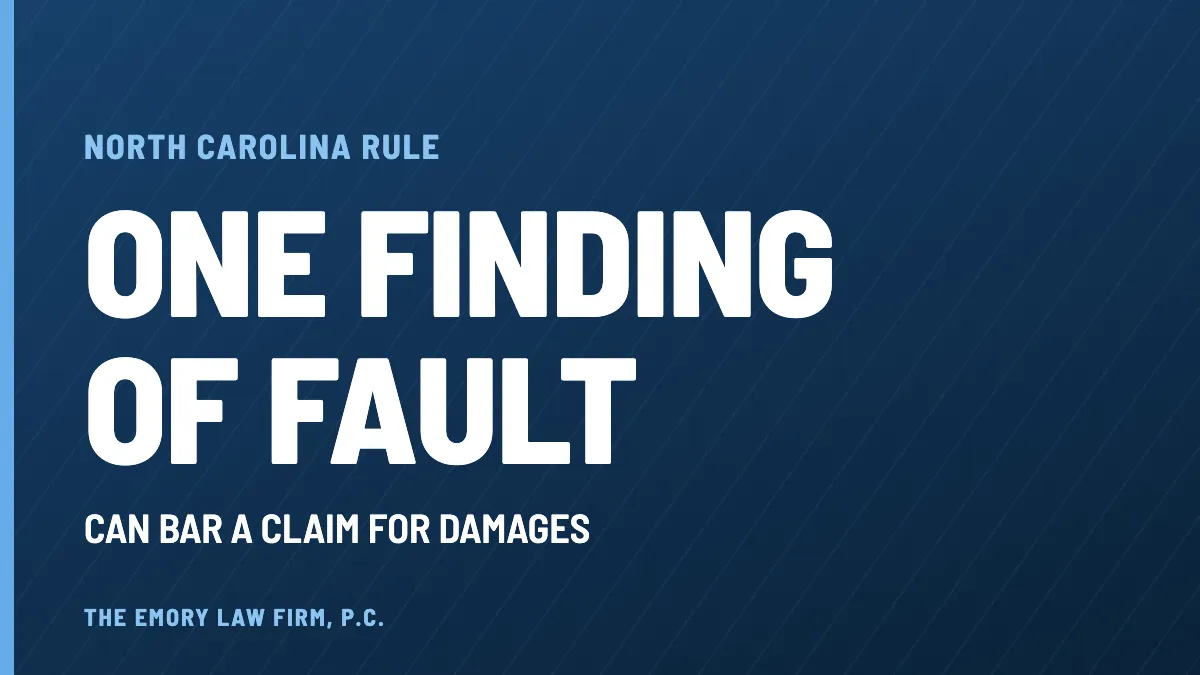
Quick answer: After a serious truck crash in North Carolina, the question of fault can decide the whole claim. The North Carolina Department of Insurance says contributory negligence law “bars a driver from collecting damages if determined to be partially at fault.” In other words, if you contributed to the crash, you may not be able to collect on a liability claim against the trucking company. That is why the first conversations with an insurer matter so much.
Many people assume fault gets split up, with each side paying its share. That is not how the state’s insurance regulator describes the rule here. This guide explains what the rule means, how it can come up after a truck crash, and what you can do about it.
What does contributory negligence mean in North Carolina?
It means fault is close to all or nothing. If you are found to have contributed to the crash, you may not be able to collect damages on a liability claim, even if the truck driver did most of the harm. The Department of Insurance states the rule in one sentence, and it applies to drivers in a crash with a truck too.
That single sentence is the reason a claim with terrible injuries can still be in danger. A serious injury does not change the question the rule asks. The question is whether you contributed.
Who decides whether you were partly at fault?
The first person to weigh in is usually an insurance adjuster. The Department of Insurance says the adjuster investigating the accident “will attempt to determine who is negligent or at-fault.” But the adjuster’s view is not final. The department adds that any disagreement over negligence “may ultimately have to be resolved in a court of law.”
Keep in mind who that adjuster works for. If the trucking company’s insurer is handling the claim, the adjuster is looking at the crash for the company paying the claim.
How can a fault question come up after a truck crash?
Through small details that seem harmless when you are hurt and shaken. A lane change, a guess about your speed, or a casual “I didn’t see the truck” can all end up in a claim file. None of these prove anything on their own, but each one gives an insurer something to argue about.
Here is where those details tend to show up, and what helps at each point.
| When | What may get asked or written down | What helps |
|---|---|---|
| At the scene | Who moved where, how fast and when | A police report, witness names and photos |
| The insurer’s first call | What you saw, and whether you were in a hurry | Talk to a lawyer before any recorded statement |
| At the doctor | How you describe what happened | A short, accurate account, the same every time |
| In the crash report | What the officer noted about each driver | Order the report and read it carefully |
What should you do at the scene and in the first days?
Start with your health, then protect the facts. The Department of Insurance checklist says to call the police, especially when there are injuries, and to get the other driver’s name, address, phone number, license plate, driver’s license number and insurance information, along with the names and contact details of any witnesses.
It also says, “Don’t agree to forget about the accident.” You may have hidden damages or unknown injuries. With a commercial truck, also write down the company name on the door and the trailer number. Then look at what to do after a serious truck crash.
How do you get the crash report?
Use NCDMV form TR-67A. A person who was in the crash can order a redacted copy by mail or in person, but individuals cannot order online. NCDMV lists in-person locations in Raleigh and at the Huntersville License Plate Agency, and asks you to allow 10 business days for mail requests.
Read the report closely when it arrives. If it says something about you that is wrong, a lawyer should know before anyone relies on it.
What else matters besides fault?
Plenty, and most of it sits with the trucking company. A fault fight does not stop the rest of the case from moving, and some of the best answers about the crash are in records the carrier controls:
- Whether the driver was over the federal hours limits.
- Whether brakes, tires and upkeep met the rules.
- Whether the carrier ran the post-crash alcohol and drug tests it had to run.
Those facts can change how a fault argument looks. Time matters here too. North Carolina generally gives you three years to file a personal injury lawsuit, but the trucking company’s duty to keep some records ends much sooner.
Why does a claims background help with a fault fight?
Because a fault argument is usually built inside a claim file. After law school, Randy Emory worked in State Farm’s claims department for three years and handled over three thousand auto claims, which taught him how an insurance company handles the claims it receives.
That experience does not predict the result of any case. It does mean he has seen how a file gets put together from the other side of the table.
Why call The Emory Law Firm after a serious truck crash?
Randy Emory started The Emory Law Firm, P.C. in 2001, and it works from one office in Charlotte. Read more about Randy, or see what clients say. The firm is bilingual, in English and Spanish.
If you were badly hurt, or you lost someone, and an insurer is already asking what you did, call before you answer. Talk to the firm at (704) 371-4333.
Sources
This article is general information about North Carolina and federal law, not legal advice. Every case is different, so talk to a lawyer about yours. Reading it or contacting the firm does not create an attorney-client relationship.
FAQ
Common Questions
Still have questions? Call (704) 371-4333, Monday to Thursday 9am to 5pm and Friday 9am to 4pm.
What is contributory negligence in North Carolina?
It is the rule that a person who contributed to a crash may not be able to collect on a liability claim. The North Carolina Department of Insurance says the law "bars a driver from collecting damages if determined to be partially at fault."
Does the adjuster get to decide who was at fault?
The adjuster investigating the crash will try to determine who was negligent, but that is not the last word. The Department of Insurance says any disagreement over negligence may ultimately have to be resolved in a court of law.
How do I get my North Carolina crash report?
Fill out NCDMV form TR-67A and send it by mail with payment, or bring it in person, including to the Huntersville License Plate Agency. Individuals cannot order online and receive a redacted copy. Allow 10 business days for mail requests.
More articles
-
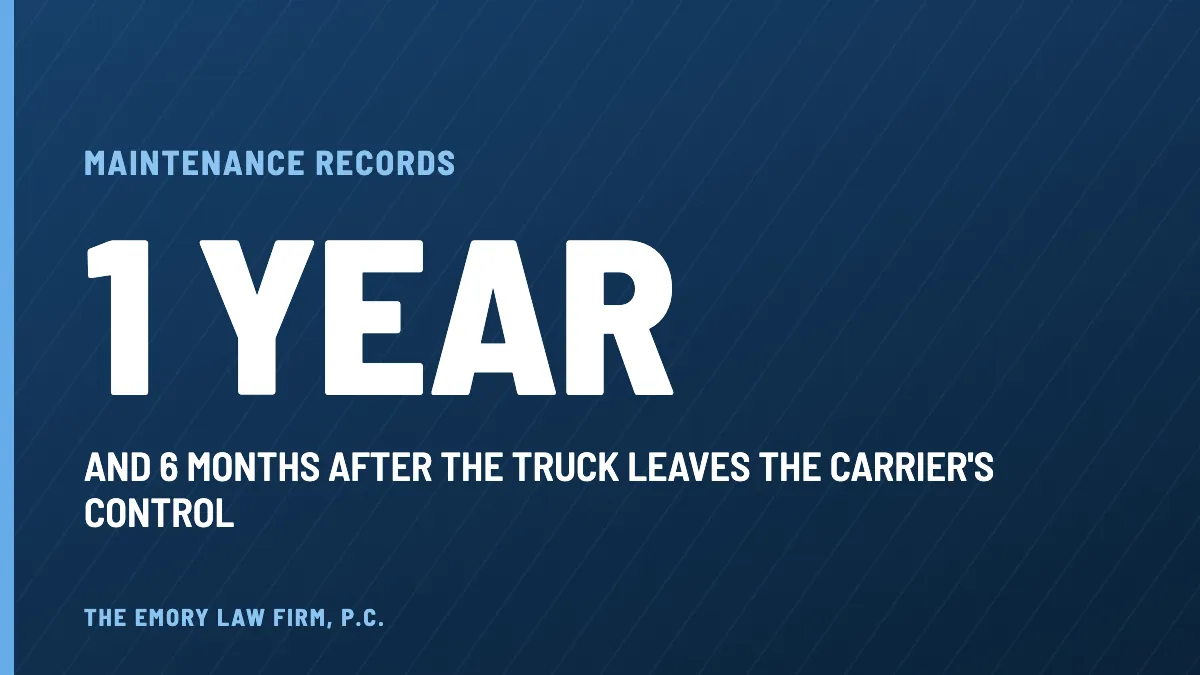
Brakes, Tires and Upkeep: What Truck Carriers Must Inspect and How Long They Keep the Records
Federal rules make every motor carrier systematically inspect, repair and maintain its trucks, and keep the records for 1 year and for 6 months after a truck leaves its control. Here is what those rules cover and why they matter after a serious crash in North Carolina.
Read more -
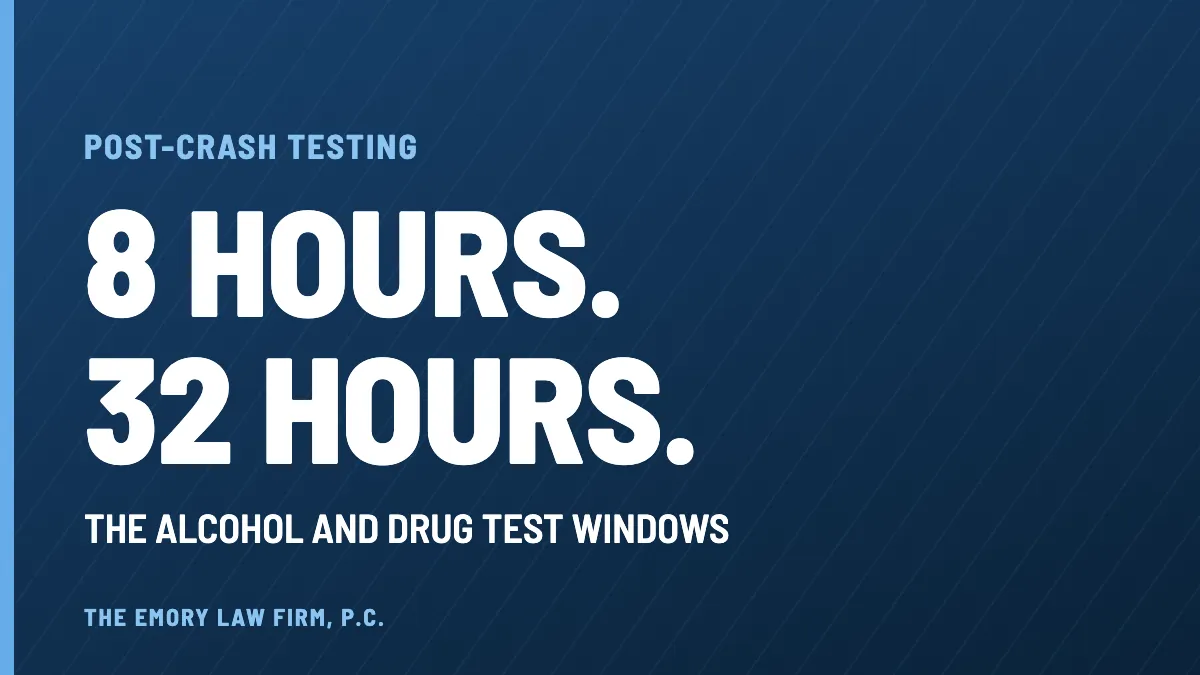
Drug and Alcohol Tests After a Truck Crash: The 8-Hour and 32-Hour Windows
After a fatal truck crash, or an injury or tow-away crash with a citation, the trucking company must test its driver. Alcohol testing stops at 8 hours and drug testing at 32 hours. Here is how 49 CFR 382.303 works and why the timing matters.
Read more -
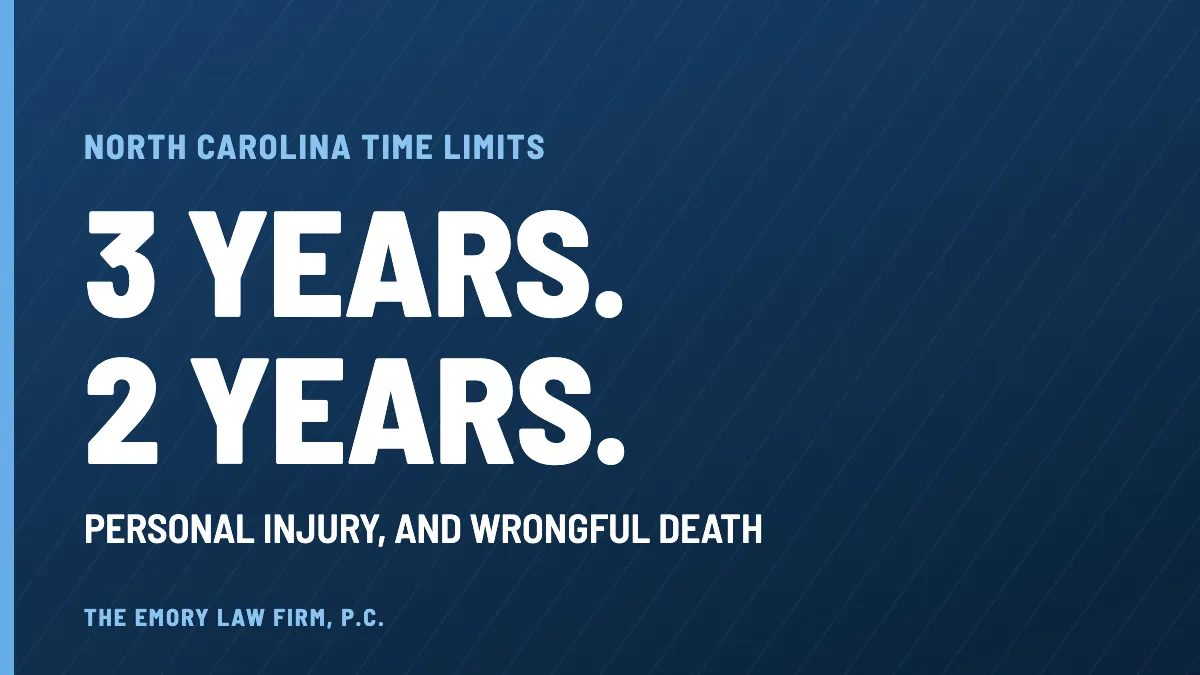
How Long Do You Have After a Serious Truck Crash in North Carolina?
North Carolina generally gives you three years to file a personal injury lawsuit under G.S. 1-52(16) and two years for a wrongful death under G.S. 1-53(4). Here is when those clocks start, and why the trucking company's records can't wait that long.
Read more
Get In Touch
Ready to Get Started?
If this sounds like your situation, we can help.