
Blog
Advice From Our Team
Plain-language guides to serious truck crashes in North Carolina: fault, federal trucking rules, insurance and the time limits to file, by attorney Randy Emory.
-
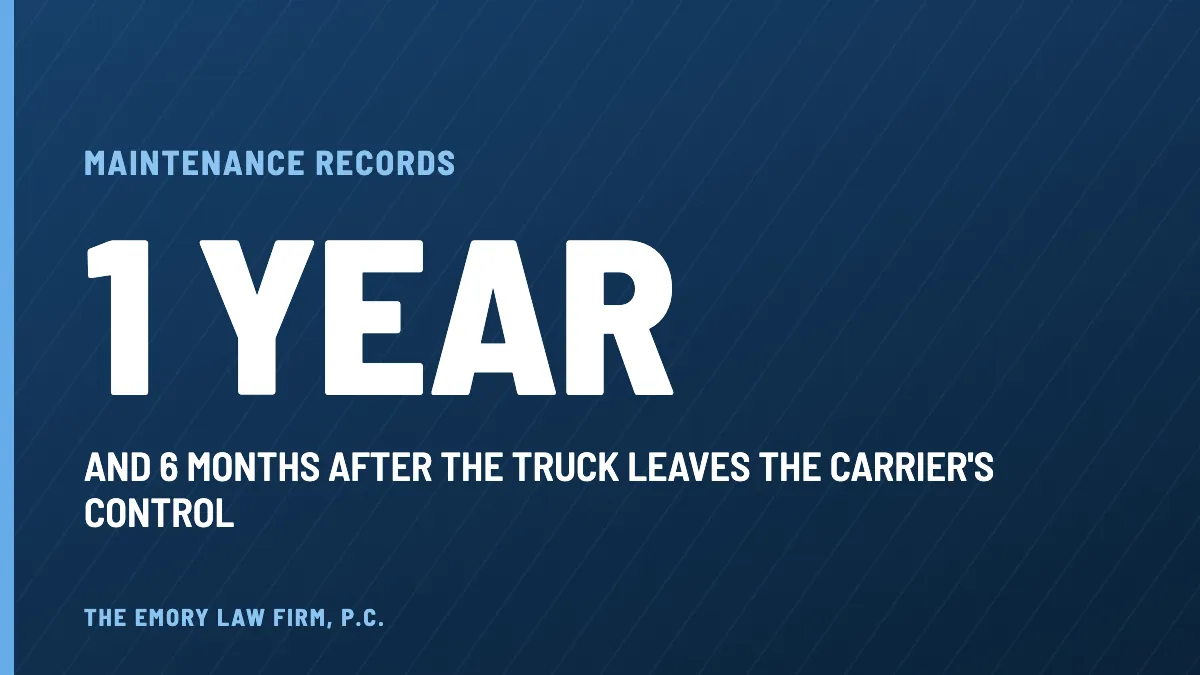
Brakes, Tires and Upkeep: What Truck Carriers Must Inspect and How Long They Keep the Records
Federal rules make every motor carrier systematically inspect, repair and maintain its trucks, and keep the records for 1 year and for 6 months after a truck leaves its control. Here is what those rules cover and why they matter after a serious crash in North Carolina.
Read more -

Drug and Alcohol Tests After a Truck Crash: The 8-Hour and 32-Hour Windows
After a fatal truck crash, or an injury or tow-away crash with a citation, the trucking company must test its driver. Alcohol testing stops at 8 hours and drug testing at 32 hours. Here is how 49 CFR 382.303 works and why the timing matters.
Read more -

Hit by a Truck in North Carolina: Why One Finding of Fault Can End Your Claim
North Carolina's contributory negligence law can bar a driver found partly at fault from collecting damages. Here is what that means after a serious truck crash, and what to do before you talk to the trucking company's insurer.
Read more -

How Long Do You Have After a Serious Truck Crash in North Carolina?
North Carolina generally gives you three years to file a personal injury lawsuit under G.S. 1-52(16) and two years for a wrongful death under G.S. 1-53(4). Here is when those clocks start, and why the trucking company's records can't wait that long.
Read more -
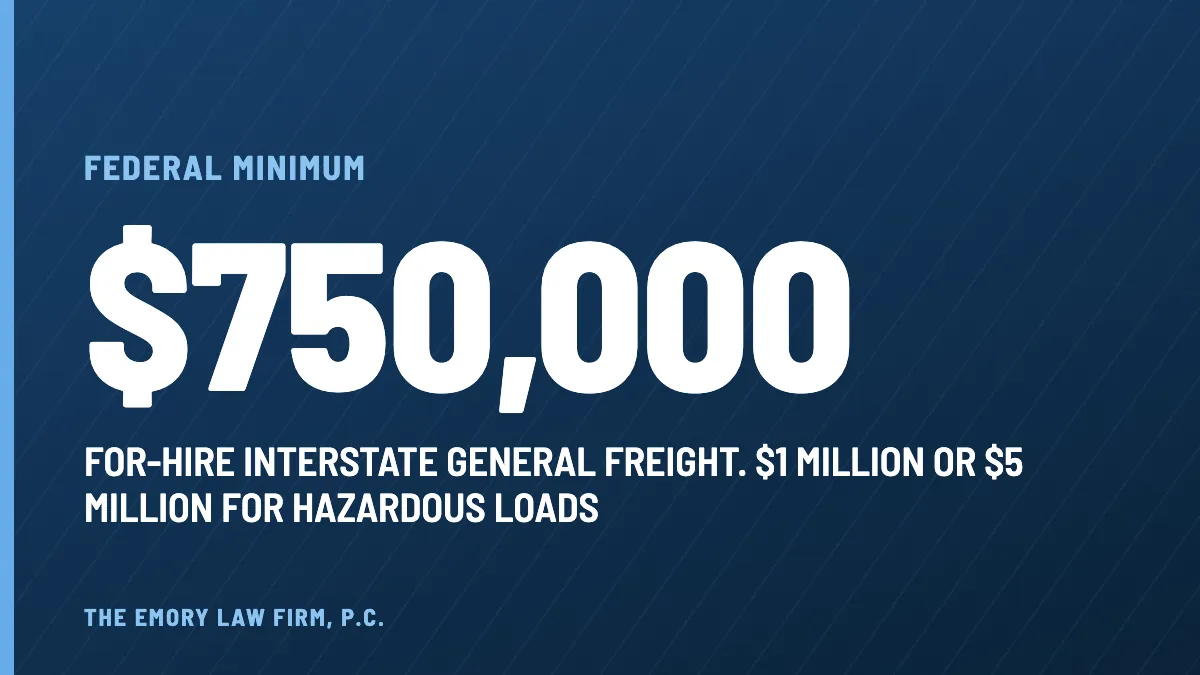
How Much Insurance Must a Trucking Company Carry? $750,000 to $5 Million
Federal rule 49 CFR 387.9 sets minimum coverage for motor carriers: $750,000 for for-hire interstate general freight, and $1 million or $5 million for hazardous loads. Here is what those numbers mean after a serious truck crash in North Carolina.
Read more -

Truck Driver Fatigue: The 11-Hour Limit, the 14-Hour Window and the 60/70-Hour Week
Federal rules cap how long a truck driver may drive: 11 hours inside a 14-hour window, a 30-minute break after 8 hours of driving, and 60 or 70 hours on duty a week. Here is how those limits, and the logs behind them, can show a tired driver caused a serious crash.
Read more

Get In Touch
Ready to Get Started?
Questions we didn't answer? Give us a call.